Eight Nights, 2,300 Miles, and a Very Loud Guitar Camp in Tennessee
In late August, I set out on a solo road trip, packing my schedule with as many guitar-related experiences as possible. I loaded my car and drove from Massachusetts through eleven states and 2,300 miles over nine days.
The trip's centerpiece was Andy Wood's four-day Woodshed Guitar Experience in Crossville, Tennessee, with a faculty that included Greg Koch, Eric Gales, and Martin Miller (all players I admire). I had been awarded a scholarship to attend, and I thought it would be fun to drive the 1,100 miles each way as an excuse to visit a few places I've wanted to go for years, including the Rock & Roll Hall of Fame, the Nashville guitar shops, and the Martin factory. Here's the story.
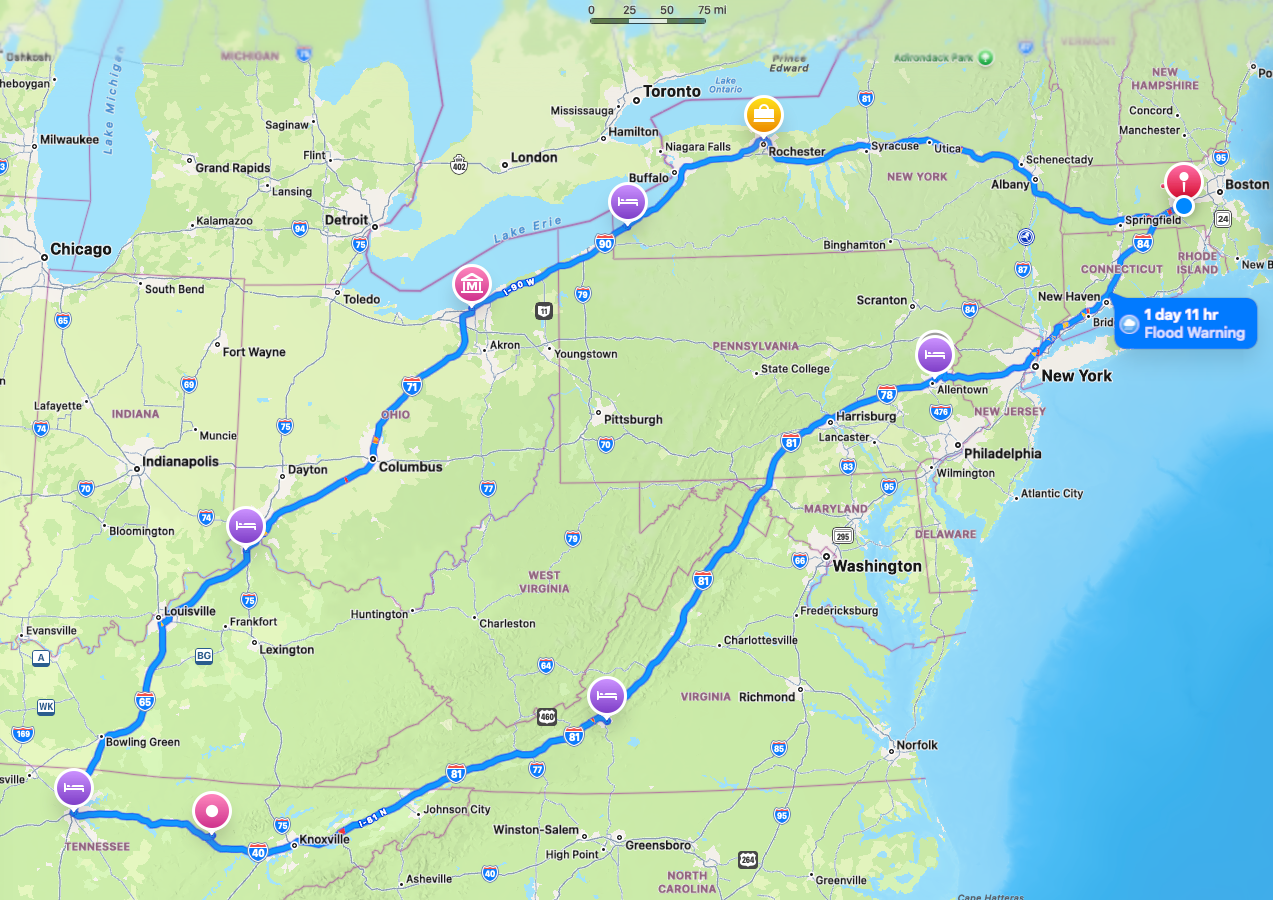
2,300 miles, 11 states, 8 nights, 6 hotels.
Day 1: Rochester
The first day was the longest drive, 500 miles west on I-90, with one stop: the House of Guitars in Rochester, NY. HoG has been on my radar since the early 90s, when I was an undergrad at Cornell. It had a reputation for having a massive collection and being a bit of a maze. I was not prepared for how claustrophobic it was inside.
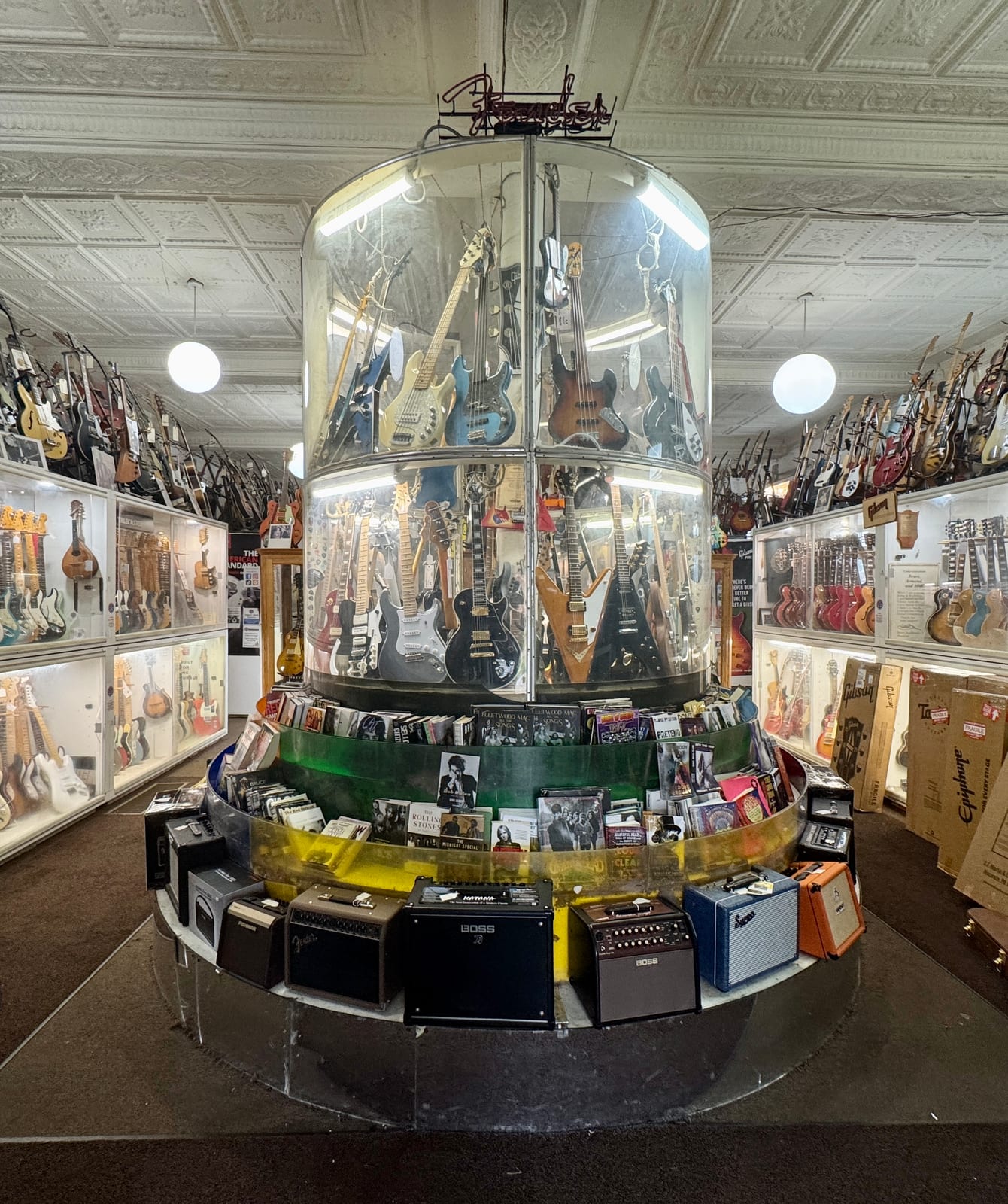
The entryway to the House of Guitars in Rochester, NY.
Guitar displays are stacked three high, seemingly at random, with narrow pathways between rows, almost like the stacks at a research library. The store has hosted many well-known guitarists over the years, and I spotted guitars signed by members of Anthrax, Metallica, and Def Leppard, among others.
Day 2: Cleveland
I had taken the northern route mainly as an excuse to stop by the Rock & Roll Hall of Fame in Cleveland, OH.
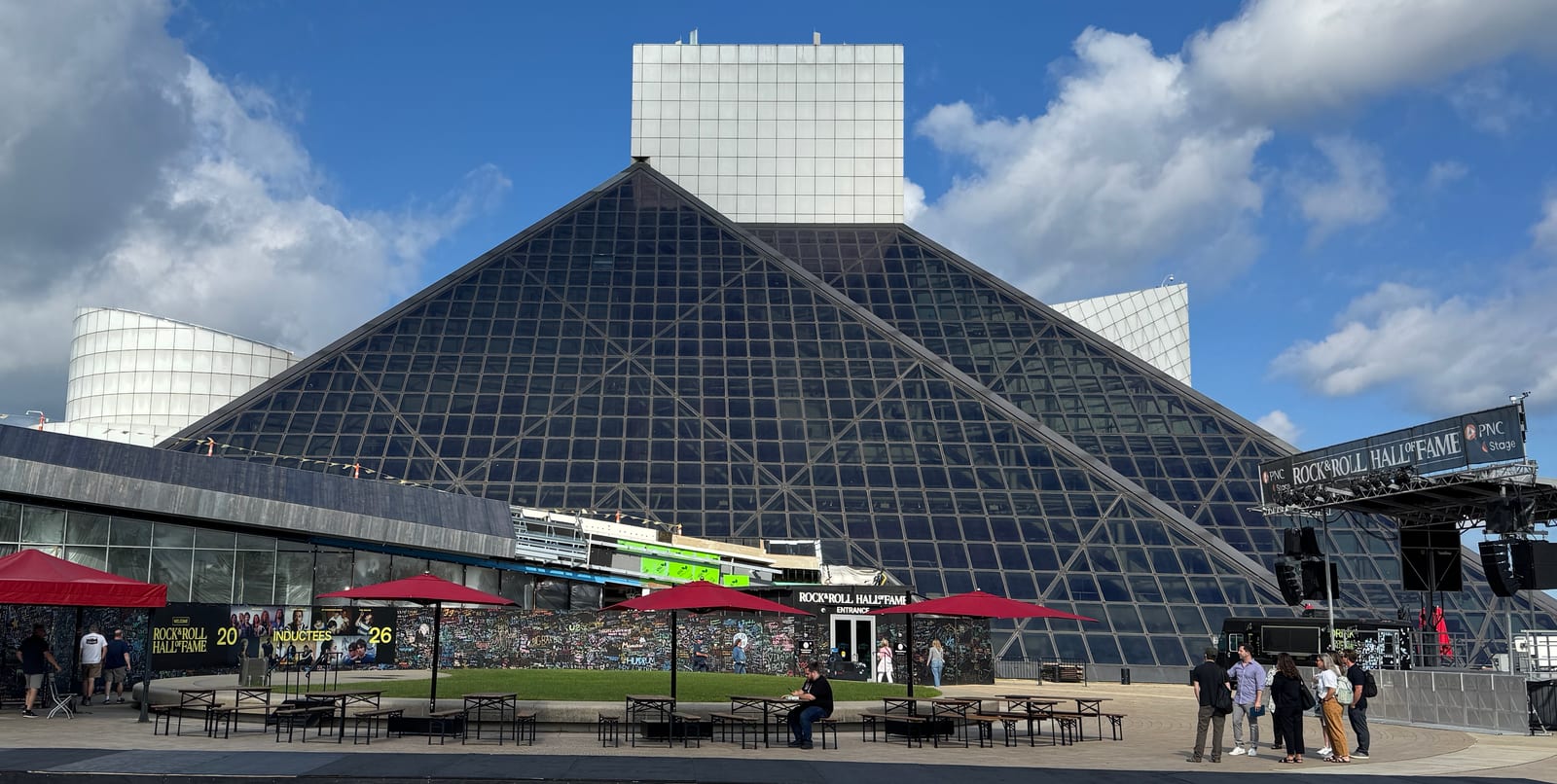
The Rock & Roll Hall of Fame in Cleveland, OH.
The main attraction of the HoF is a museum with displays chronicling the history of rock & roll, using musical instruments, clothing, and paper documents to tell the story.
It sounded great, but as I read the "fine print" on some of the displays, it became clear that a large portion of the collection is reproductions rather than original artifacts. Sigh.
I was very excited to walk up to this display of Eddie Van Halen guitars: the ~1980 "Star," "Shapes," and "Circles" guitars.
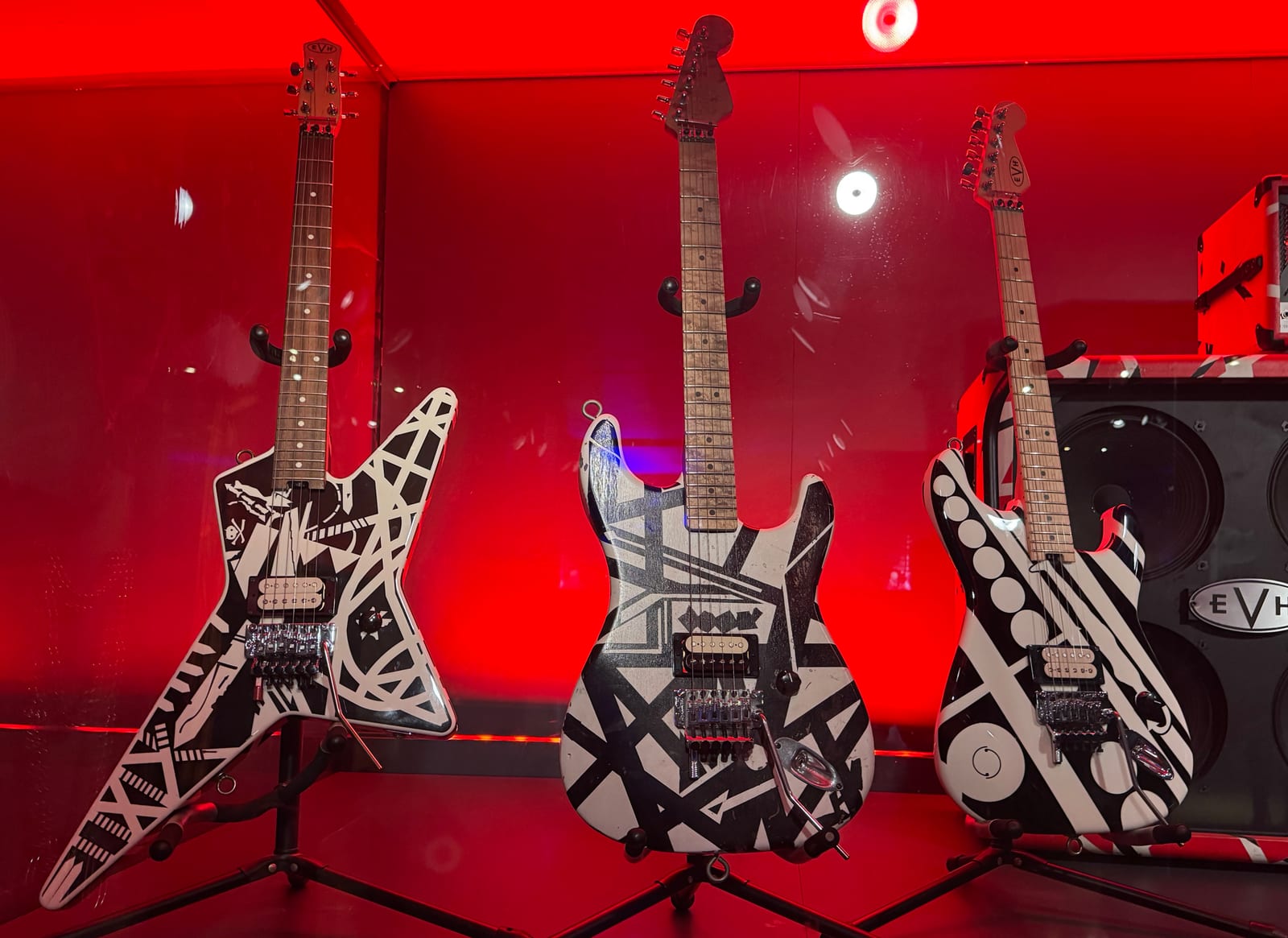
Only one of these was actually played by EVH.
Cool, right? Until you realize that EVH only ever played one of them. The "Shapes" guitar in the center was played on stage during the Fair Warning tour, but the others are copies.
It was cool to see genuine artifacts like instruments owned and played by Les Paul, Prince, Chuck Berry, Elliot Easton, Steve Cropper, Miles Davis, John Lennon, Jimi Hendrix, Bob Dylan, Joni Mitchell, and Kurt Cobain, but they sat side by side with a lot of reproductions.
Day 3: Nashville
I had been to Nashville a couple of times on business trips, and I wasn't interested in revisiting the strip or the Opry this time. That isn't a knock on the strip. On a 2015 visit to Robert's Western World, I heard a brilliant chicken-pickin' Telecaster shredder who turned out to be a teenage Daniel Donato:
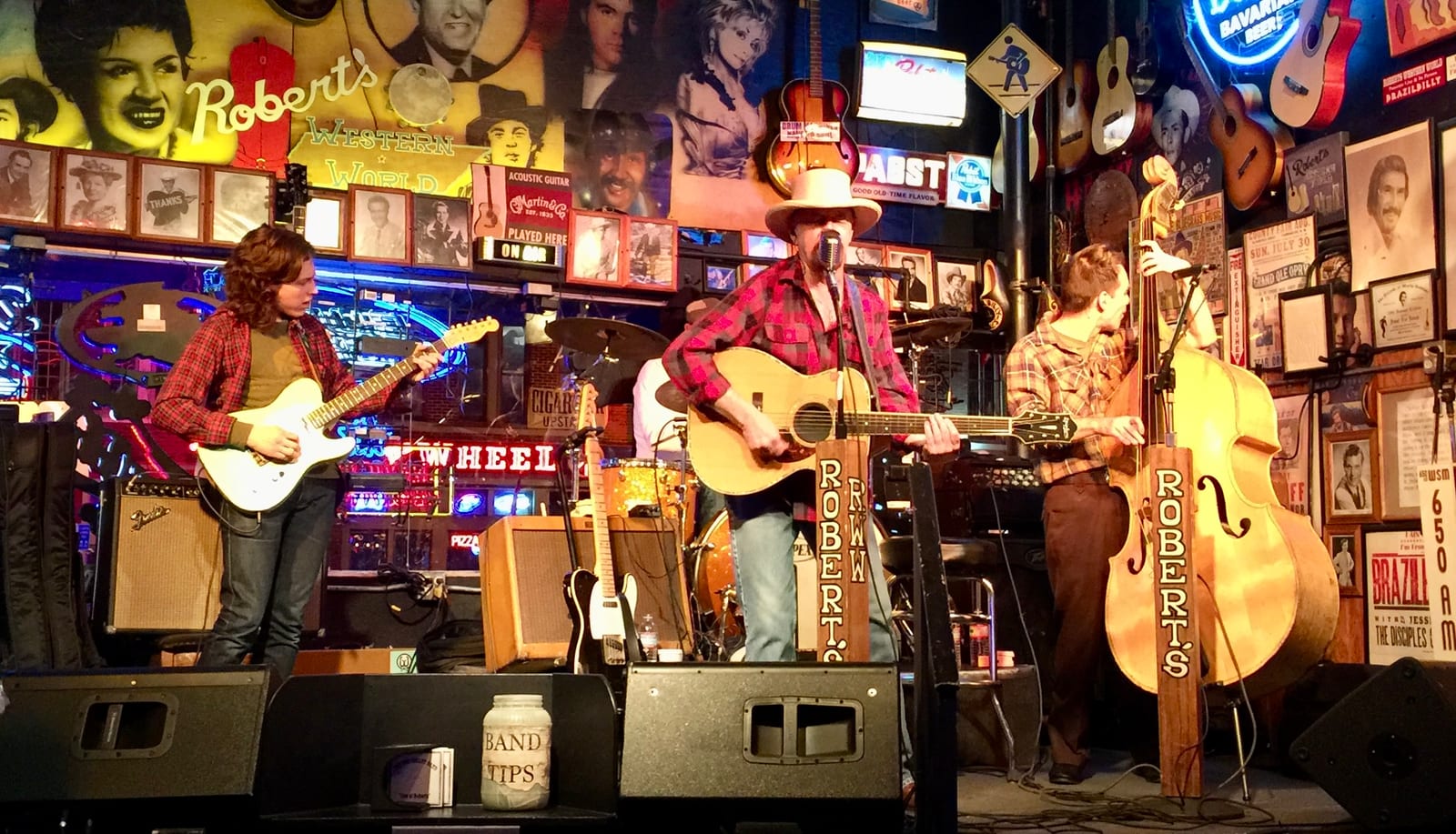
Flashback to randomly catching Daniel Donato at Robert's back in 2015.
When I arrived, I decided to check out the big guitar shops: Gruhn's, Carter Vintage, and the Gibson Garage. I saw more outrageously expensive guitars in a couple of hours than I had previously seen in my entire life.
Gibson was the least impressive store overall, but it was still pretty cool to see $500k worth of Les Pauls slowly circling around the room on a moving ceiling track.
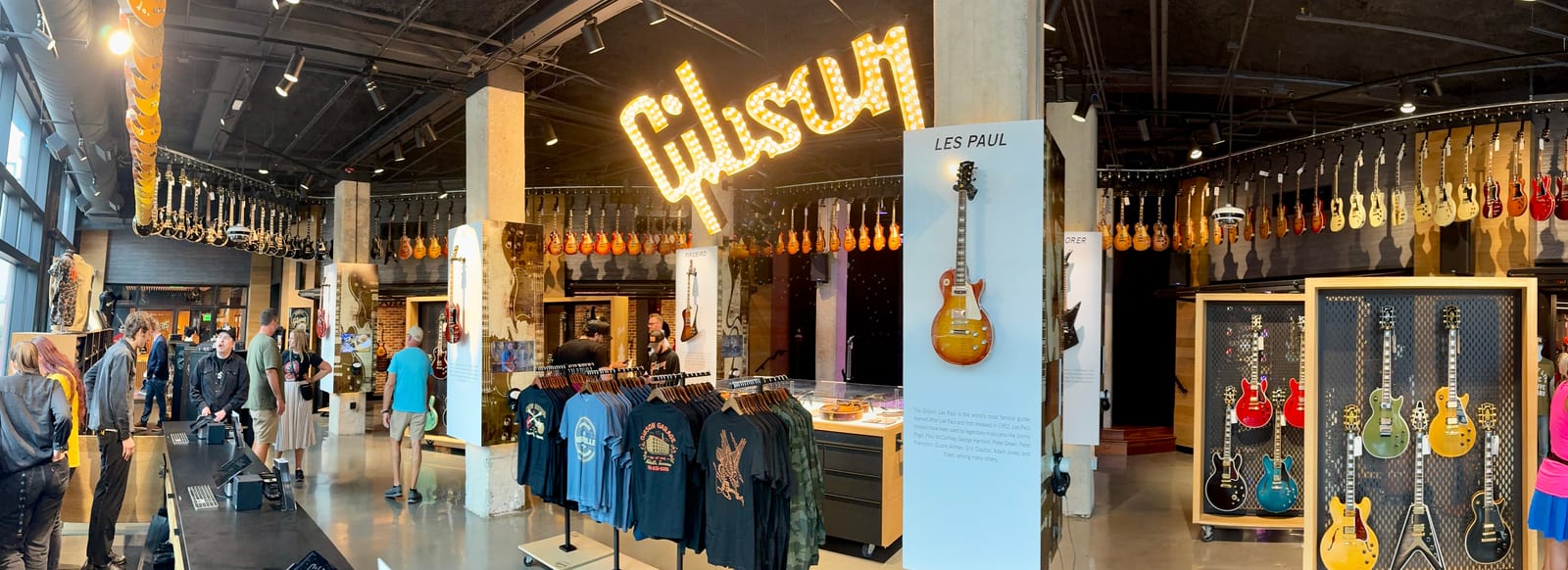
The Gibson Garage show floor.
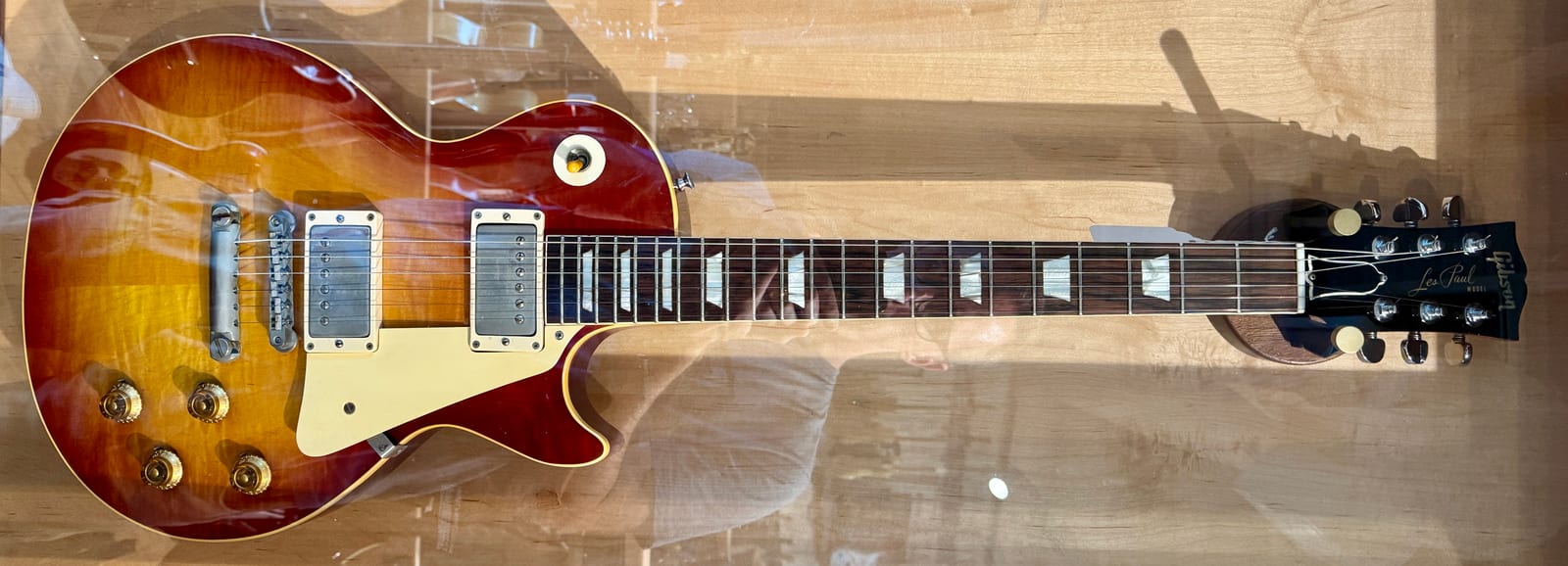
This 1960 Les Paul at Carter Vintage Guitars was tagged at $425,000 (including the original hard shell case 😅). I didn't ask to play that one.
The highlight of my Nashville visit was seeing Guthrie Trapp's trio at the 5 Spot for a $10 cover (if there's a cover charge in Nashville, you know it's going to be a good show). Guthrie's playing was some of the best I heard on the trip. It was soulful and rich, and his set list was an eclectic mix of original instrumentals (I recognized one from his terrific "In Stereo" album with Tom Bukovac).
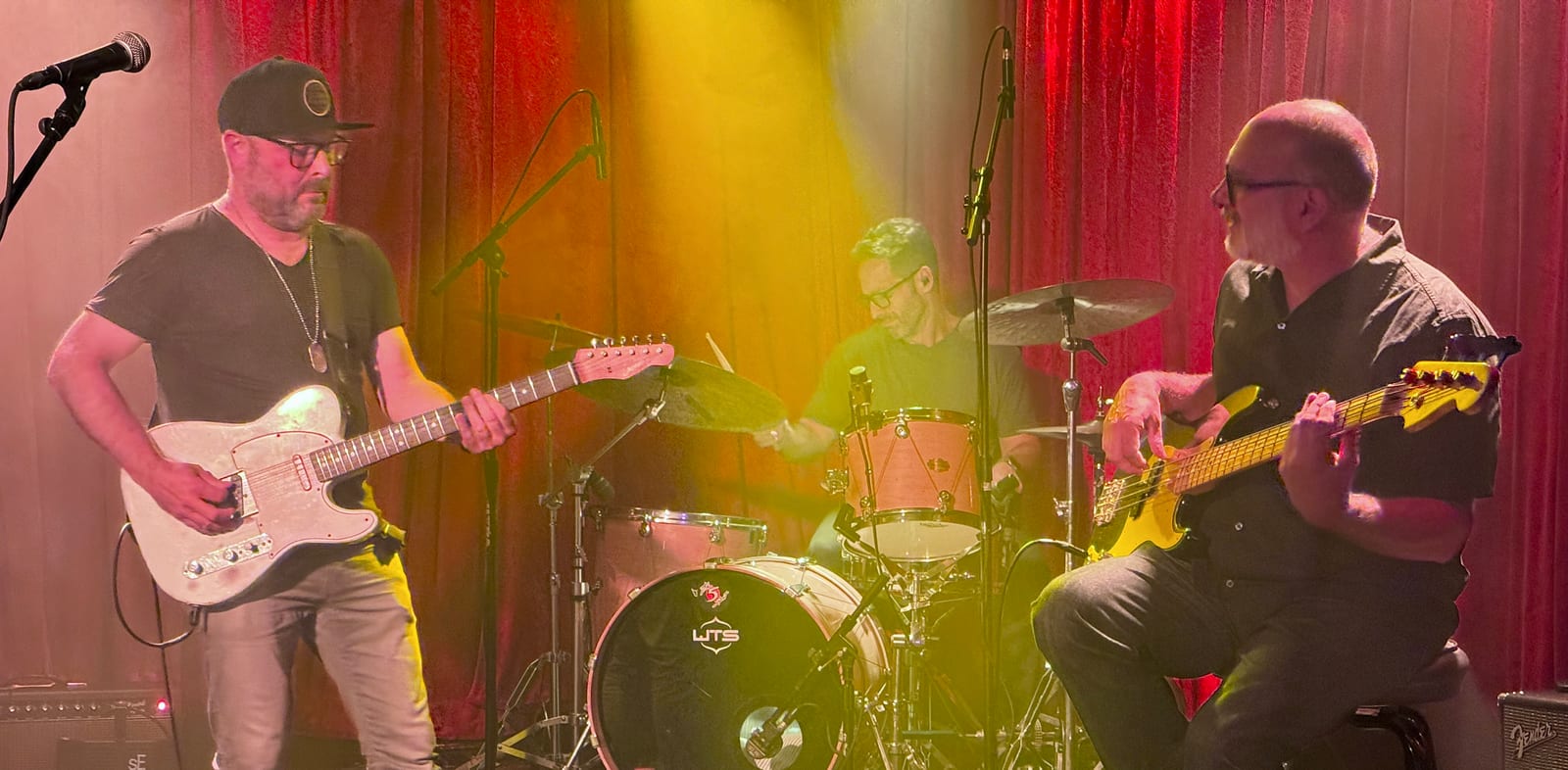
The Guthrie Trapp trio at the 5 Spot in Nashville, TN, August 26, 2026.
Days 4 to 7: the Woodshed Guitar Experience
The Woodshed Guitar Experience ran Thursday evening through Sunday morning at Lake Frances Retreats outside Crossville, TN. The days centered on masterclasses with each instructor, followed by a concert every night, and then late-night camper jam sessions.
One highlight for me was the bluegrass concert on the first night. I've never listened to much bluegrass, but the performers were top-notch, and I was mesmerized.
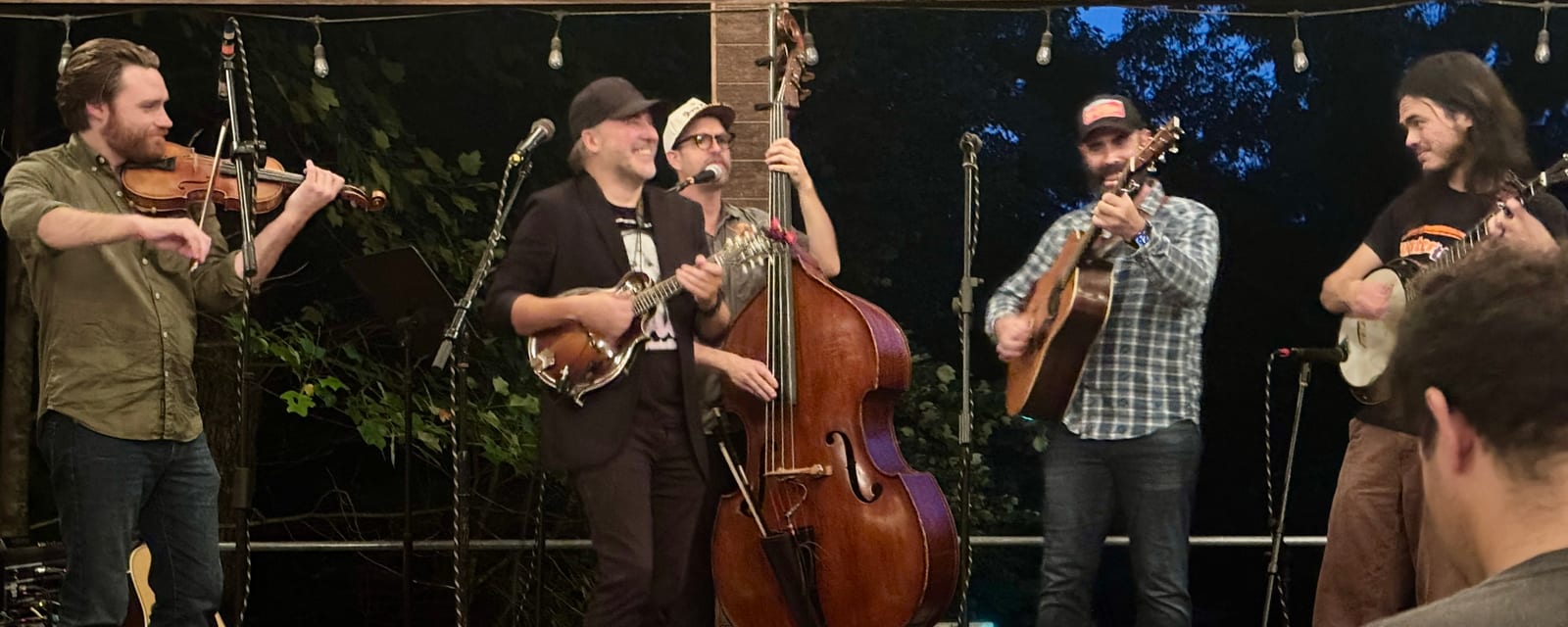
Pictured (L-R): Eli Bishop (Grand Ole Opry), Andy Wood, Daniel Kimbro (who just got off tour as Eric Johnson's bass player), Cody Kilby (a national flat-picking champion), and Jesse Ead.
Another surprise highlight was being recognized (twice) by campers who came up, introduced themselves, and thanked me for my videos. That was a nice surprise.
The masterclasses were a mixed bag. A short session in front of a room of players at every level is a hard format, and it favours the teachers over the players. Eric Gales is a brilliant player, but the format didn't give him much to work with as a teacher. Greg Koch's session turned into a lesson on chicken picking, which was a lot of fun to watch. The lesson I took from the week is that playing ability and teaching ability are not very correlated.
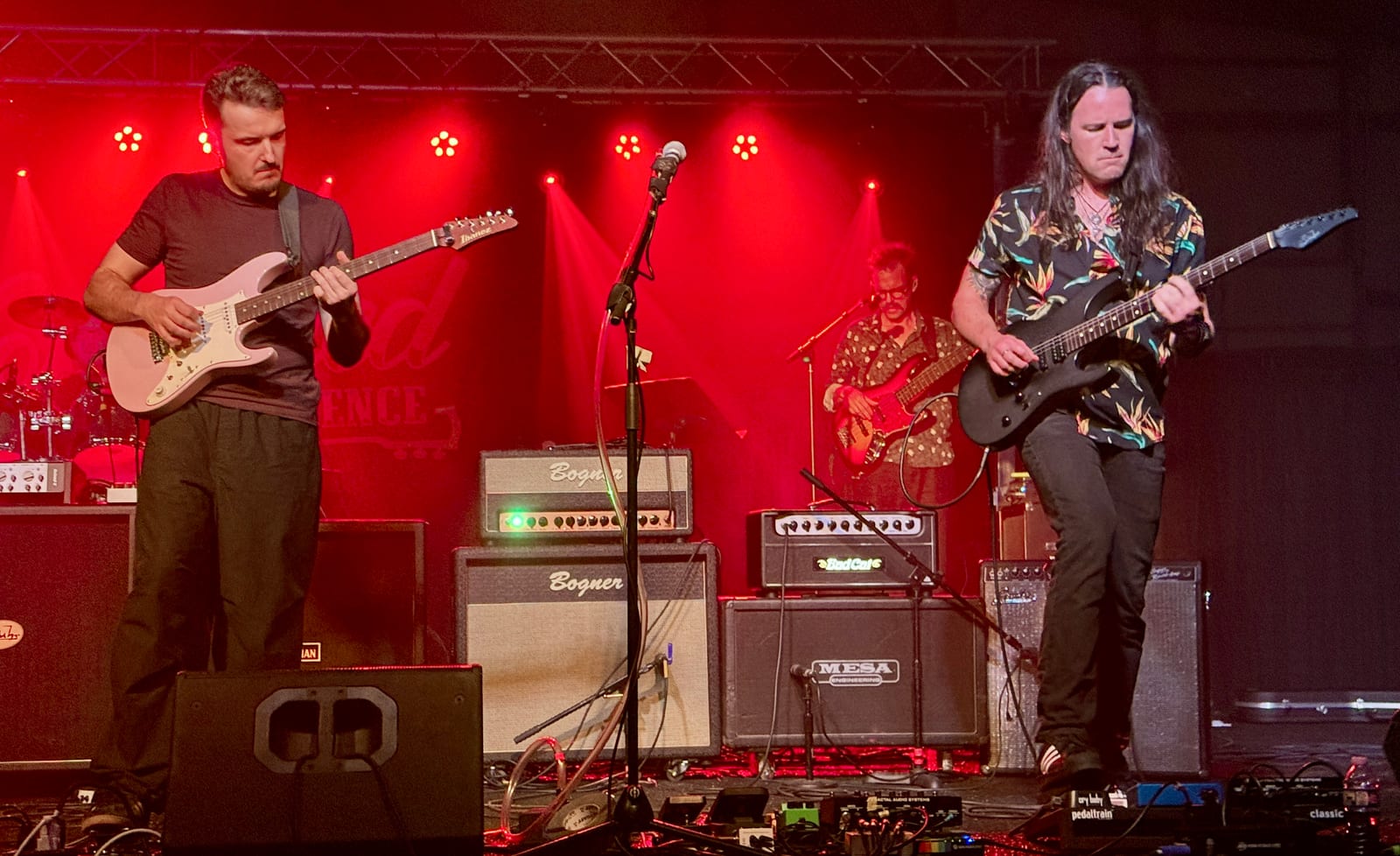
Martin Miller, (Daniel Kimbro), and Ben Eller performing on Friday night at Woodshed.
The masterclass that stuck with me the most was given by Robb Cappelletto, who has been teaching Billy Strings for a few years and recently started coaching Andy Wood. He talked about fretboard geometry. He recommends covering the fretboard with six partly overlapping major scale patterns, and he turns them into a 12-day practice plan that covers every major scale, major pentatonic scale, and major triad arpeggio. The basic idea is to work through the cycle of fifths, one key per day, and each day work through 5th- and 6th-fret root positions with your fingers behind the root, straddling the root, and ahead of the root (6 positions total). I was pleased that everything he demonstrated is very well covered in my Complete Scale Fluency course, and I think my next YouTube video will demonstrate his exercises and show how to visualize them efficiently.
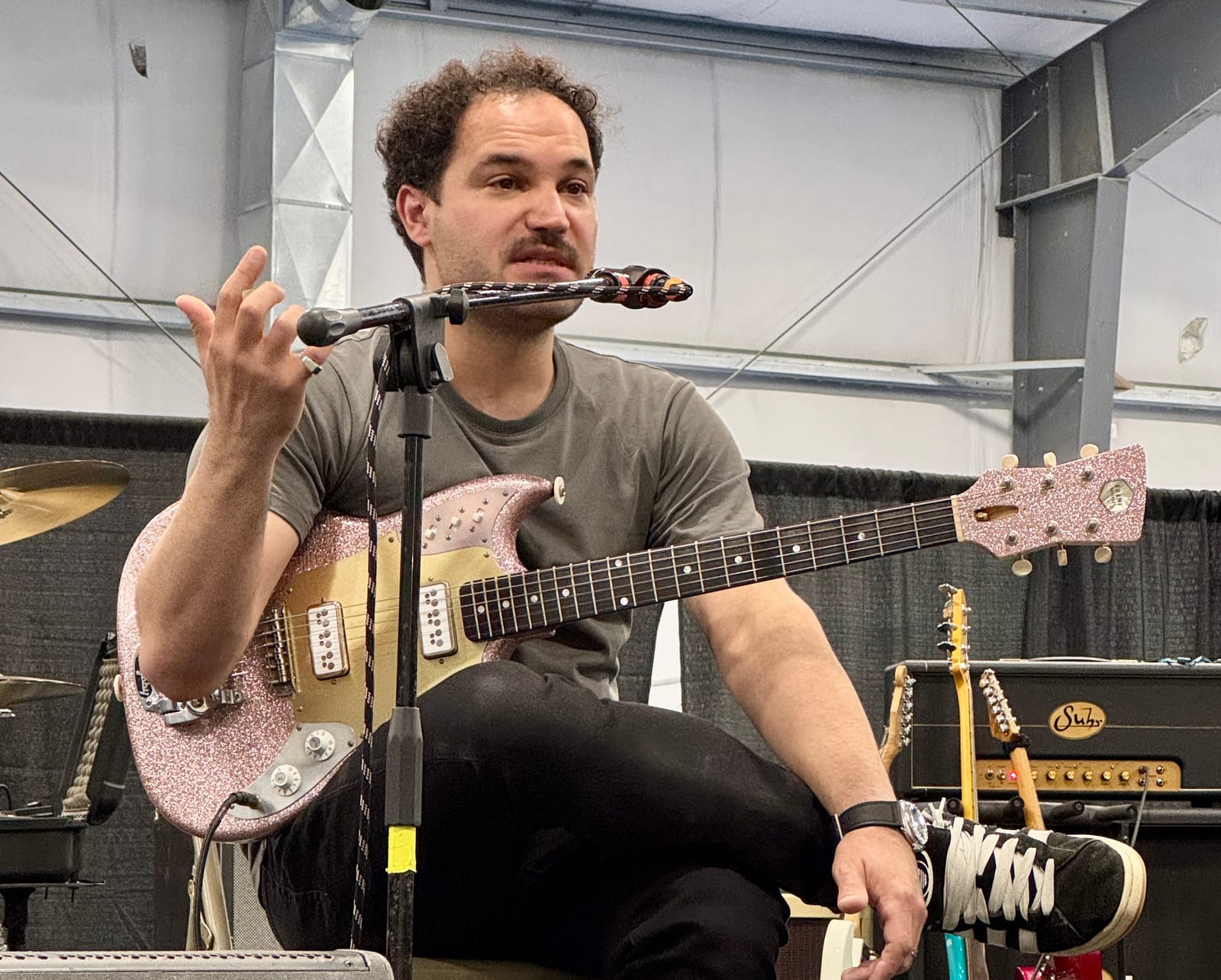
Robb Cappelletto discusses fretboard geometry at Woodshed.
After the first night, the faculty concerts were mostly unrehearsed covers, which makes for a fun hang but isn't the best way to hear players of this calibre. The camp was a lot of fun overall, albeit very loud.
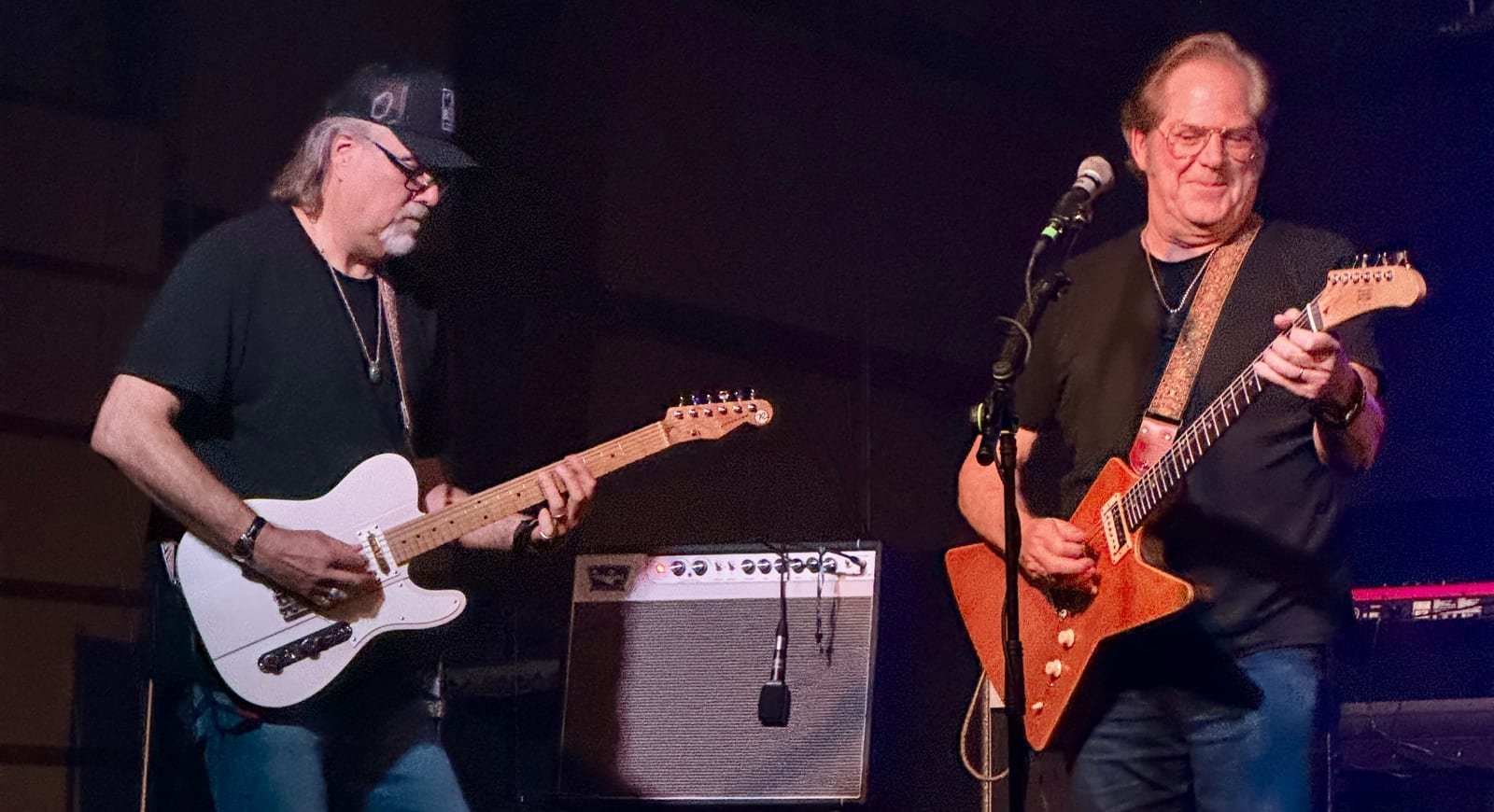
Greg Koch and John Jorgenson performing on Friday night at Woodshed.
Days 8 to 10: home by way of Nazareth
On Sunday afternoon I drove east to Roanoke, Virginia; Monday to Bethlehem, Pennsylvania; and Tuesday morning I took the tour at the Martin Guitar factory in Nazareth.
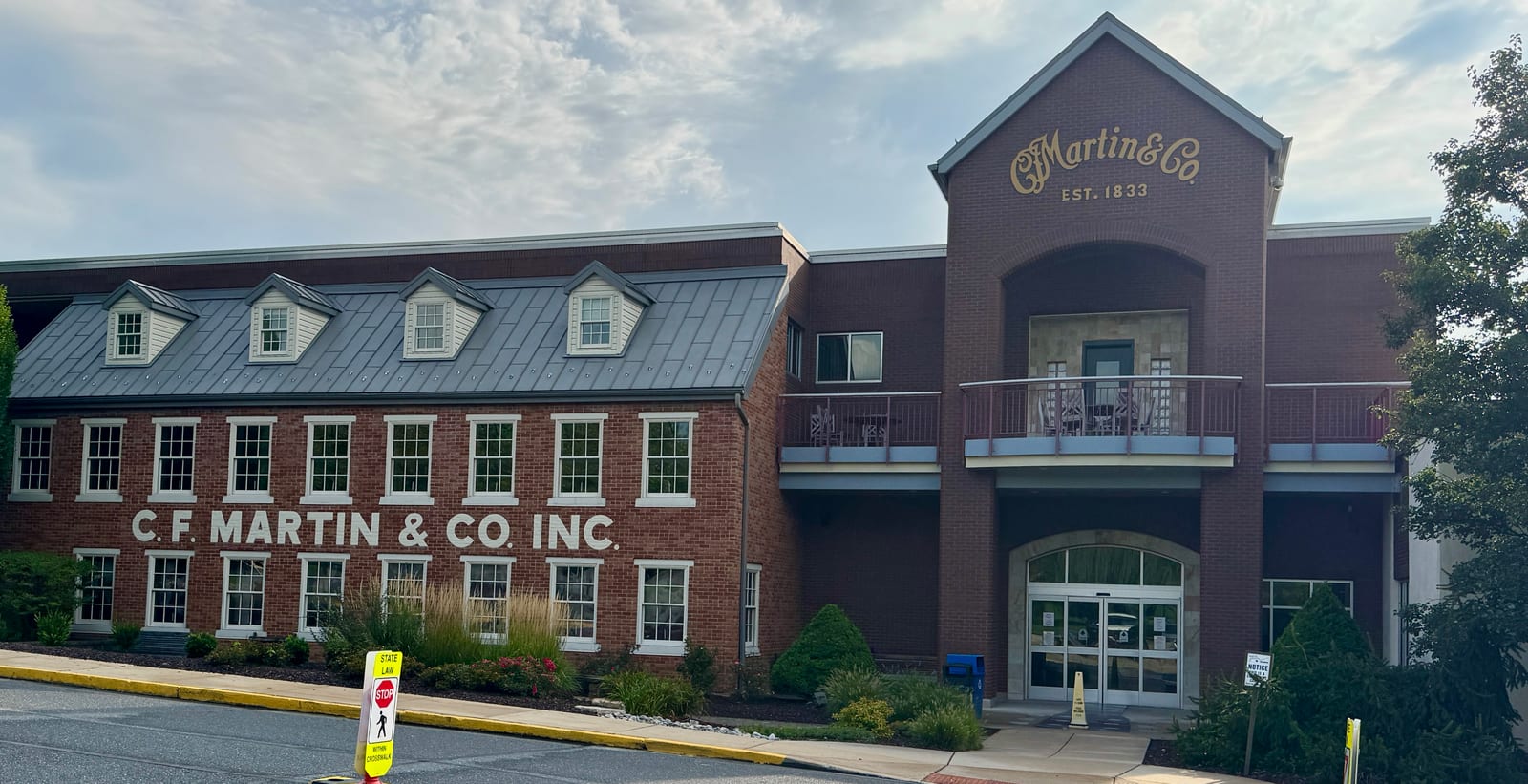
The C.F. Martin factory in Nazareth, PA.
The biggest surprise was that although many steps in Martin's manufacturing process are done by hand, virtually none involve listening. I expected demonstrations of "tapping pieces of wood" to hear the resonance or measuring the acoustic response, but none of that seemed part of their process, at least from what you can see on the tour.
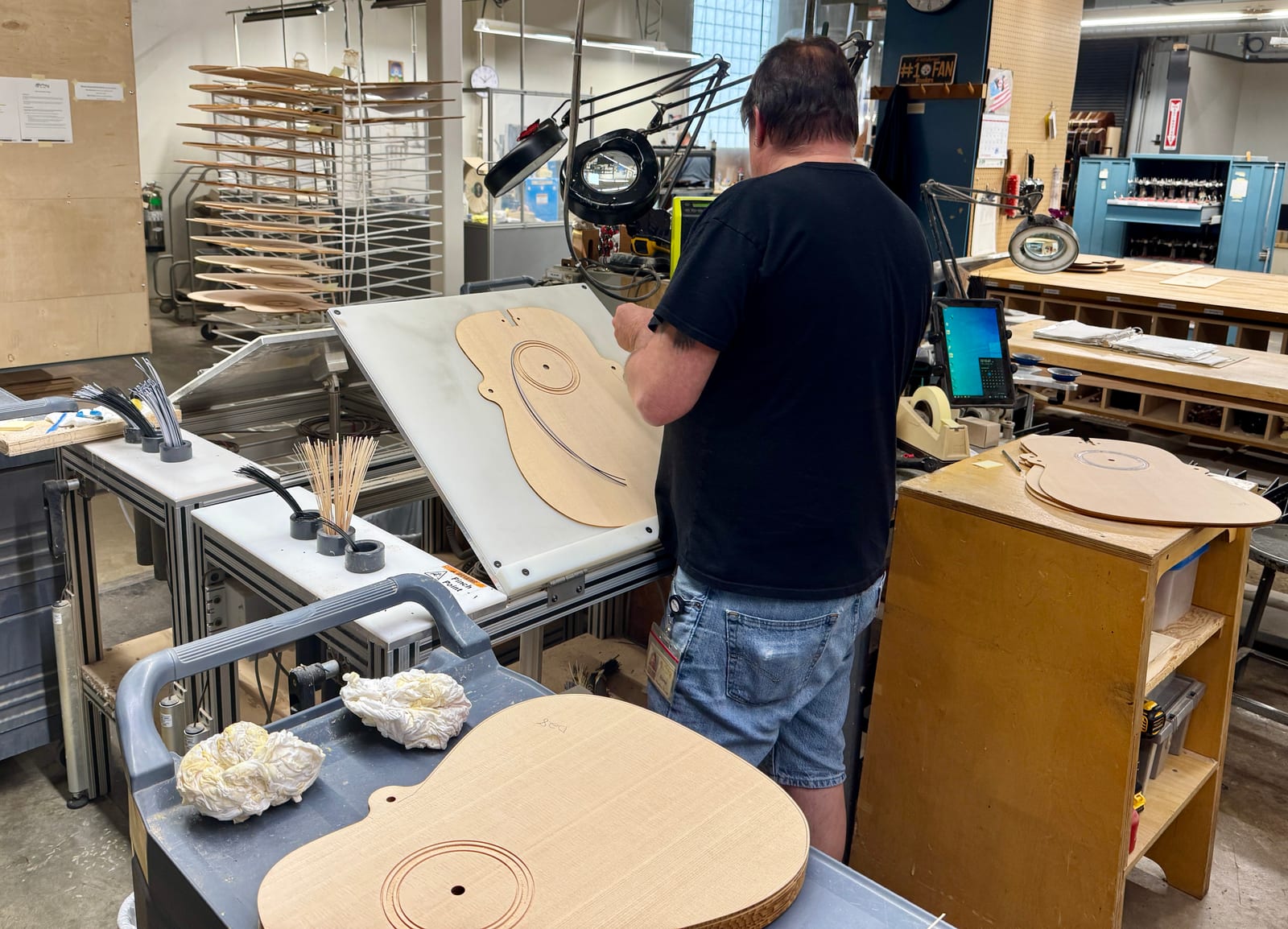
This Martin factory worker was hand-inlaying the rosettes around soundholes.
From Nazareth, it was another five hours to get home.
What I'm bringing back
Three things, in order of how much they'll change what I do next:
- Robb's exercises belong on YouTube. His six-pattern approach and the 12-day plan map directly onto what Complete Scale Fluency teaches, and showing how to visualize them efficiently is the subject of a video I'm working on now.
- Playing and teaching are different skills. The sessions I learned the most from came from the teachers in the room, not the biggest names on the poster.
- A camp like this is a social event first. If you're considering one, go for the hang, the jams, and a few days surrounded by fellow guitar nerds, and treat anything you learn in a masterclass as a bonus.
After eight nights on the road, I'm home and back to work: finishing Complete Scale Fluency first, then the half-dozen YouTube videos I have in various stages of planning.
Tagged: road trip, guitar camp, fret science
Follow along by email
The newsletter goes out every other Tuesday with what's new at Fret Science, the occasional deal, and a roundup of recent blog posts. Unsubscribe anytime.
Prefer a feed reader? Follow the blog by RSS
Discussion (1)
Sign in or create a free account to join the discussion.
Very cool! I'm in the Sonora Guitar Intensive program and Robb is a mentor. We all met up for a retreat in LA a couple weekends ago and he did an 8 song set with Andy Wood who was our special guest. I love the overlap!