Learn the blues scale across the fretboard in under a minute
This will be a quick one.
If you have internalized the rectangle and the stack as a way to visualize and navigate the pentatonic scale, learning the blues scale literally could not be simpler.
The blues scale adds a b5 interval (the “blue” note) to the minor pentatonic scale. All you need to remember is where that note is positioned relative to the stack and the rectangle.
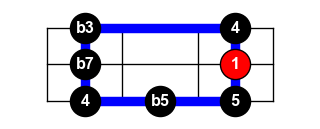
Figure 1: In the stack, the b5 sits in the middle of the lowest of three strings.

Figure 2: In the rectangle, the b5 sits just to the left of the lower string.
To make music with the blues scale, use the b5 as a passing tone (i.e., don’t dwell on it…always use it in motion to the 4th or the 5th).
This article takes about 30 seconds to read, so it comes with a bonus.
Bonus: the major blues scale
The major blues scale is used a lot less often than the traditional blues scale, but if you know the shapes for one, you know them for the other. The “blue” note in this scale is a b3, and geometrically, it’s in exactly the same spot.

Figure 3: The major blues scale stack, featuring the b3.

Figure 4: The major blues scale rectangle, featuring the b3.
Every major blues scale has a relative minor blues scale three semitones lower in pitch. The two scales have the exact same patterns and the exact same notes. As with the major and minor pentatonic scales, the only difference is the location of the tonal center (the red dots in all the diagrams).
Tagged: blues scale, fretboard, pentatonic scale
Follow along by email
The newsletter goes out every other Tuesday with what's new at Fret Science, the occasional deal, and a roundup of recent blog posts. Unsubscribe anytime.
Prefer a feed reader? Follow the blog by RSS
Discussion
Sign in or create a free account to join the discussion.
No comments yet — be the first to start the conversation.